Course Overview This course provides a comprehensive foundation in the principles and practices of laboratory safety and infection control, specifically tailored for medical and clinical laboratory environments. Students will learn how to identify, evaluate, and mitigate potential hazards associated with handling biological specimens, hazardous chemicals, and specialized laboratory equipment. The curriculum emphasizes the critical role of the laboratory professional in preventing healthcare-associated infections and maintaining a secure working environment.
Key Learning Objectives By the conclusion of this course, students will be equipped to:
-
Apply Standard Precautions: Understand and implement routine infection control practices, including hand hygiene and the appropriate selection, use, and disposal of Personal Protective Equipment (PPE).
-
Identify Laboratory Hazards: Recognize biological, chemical, physical, and ergonomic hazards within the clinical laboratory setting.
-
Execute Infection Control Protocols: Master the techniques for sterilization, disinfection, and proper decontamination of laboratory workspaces and equipment.
-
Manage Emergencies: Respond effectively to laboratory accidents, including biological spills, chemical exposures, and fire emergencies.
-
Ensure Regulatory Compliance: Navigate and adhere to safety regulations and guidelines established by major health and occupational safety organizations (e.g., OSHA, CDC, WHO).
-
Handle Regulated Waste: Properly segregate, package, and dispose of biohazardous and chemical waste.
Core Topics Covered
-
Introduction to Biosafety: Biosafety levels (BSL-1 through BSL-4) and biological safety cabinets.
-
Bloodborne Pathogens: Prevention of exposure to HIV, Hepatitis B, Hepatitis C, and post-exposure prophylaxis.
-
Chemical Hygiene: Reading Safety Data Sheets (SDS), proper storage of chemicals, and managing chemical spills.
-
Chain of Infection: Understanding how infections spread and the strategies to break the chain in a clinical setting.
-
Quality Assurance in Safety: Conducting risk assessments, safety audits, and incident reporting.
Intended Audience This course is designed for students pursuing degrees in Medical Laboratory Science, Clinical Laboratory Technology, and related healthcare disciplines where safe handling of potentially infectious materials is required.
Expected Outcomes Upon successful completion, students will possess the practical skills and theoretical knowledge necessary to protect themselves, their colleagues, and their patients from laboratory-acquired infections and occupational injuries, fostering a culture of safety and compliance in their future professional practices.
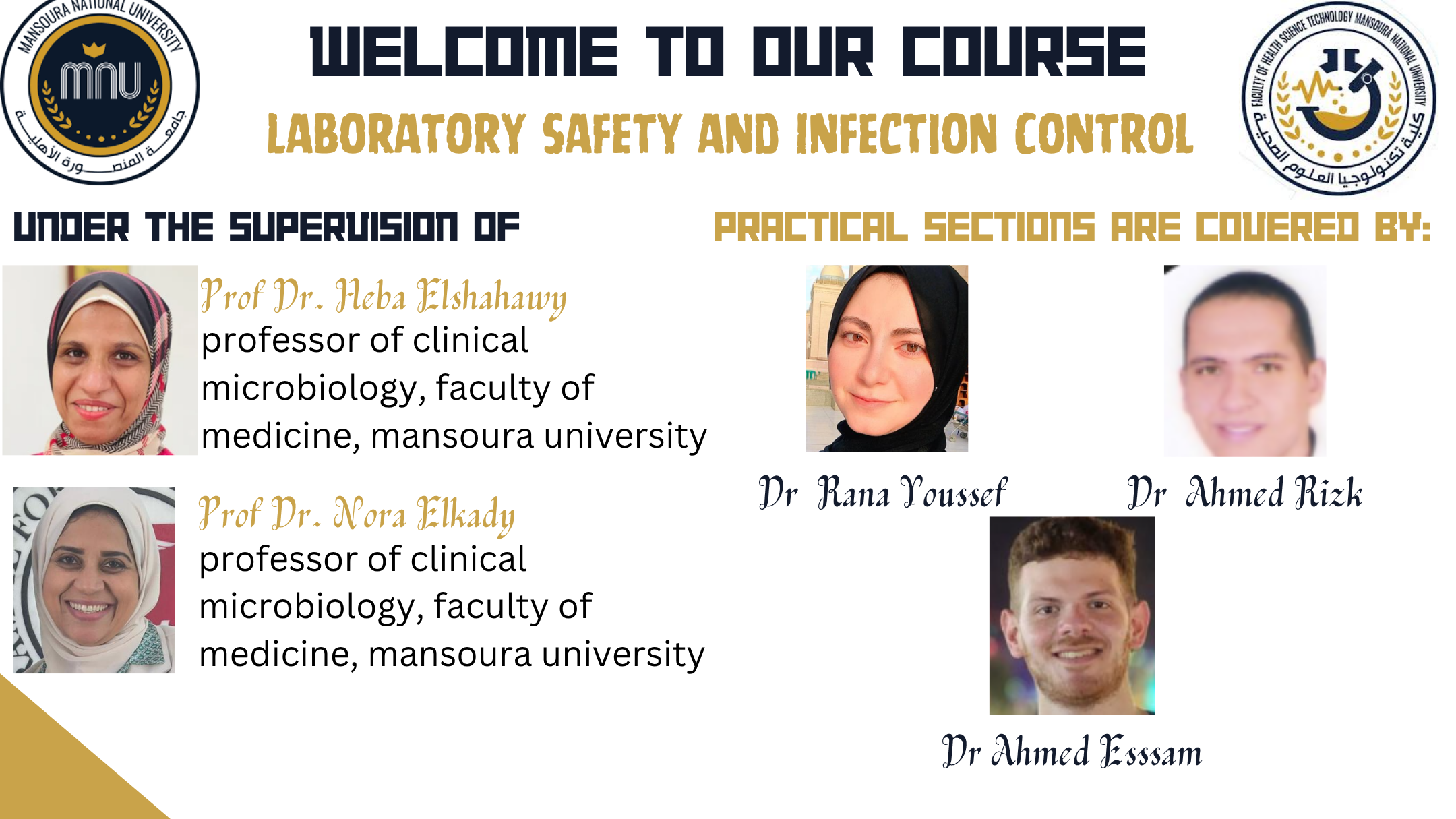
- Teacher: ندى حمدى حامد عبد المغنى عوض
- Teacher: أحمد رزق رجي شلبي
- Teacher: هبه عبد الحميد الشهاوى
- Teacher: احمد عصام عبدالمجيد المهندس
- Teacher: رنا محمد ربيع زناتى يوسف